01 / MARKET REQUIREMENT
What is changing
Software-driven capabilities depend on computing capacity, electrical power, cooling and reliable operations. Each dependency introduces a physical constraint.
AI, electrification and industrial automation are reshaping the physical economy. WMH explores the infrastructure opportunities between verified demand and execution — across power, compute, land and industrial systems.
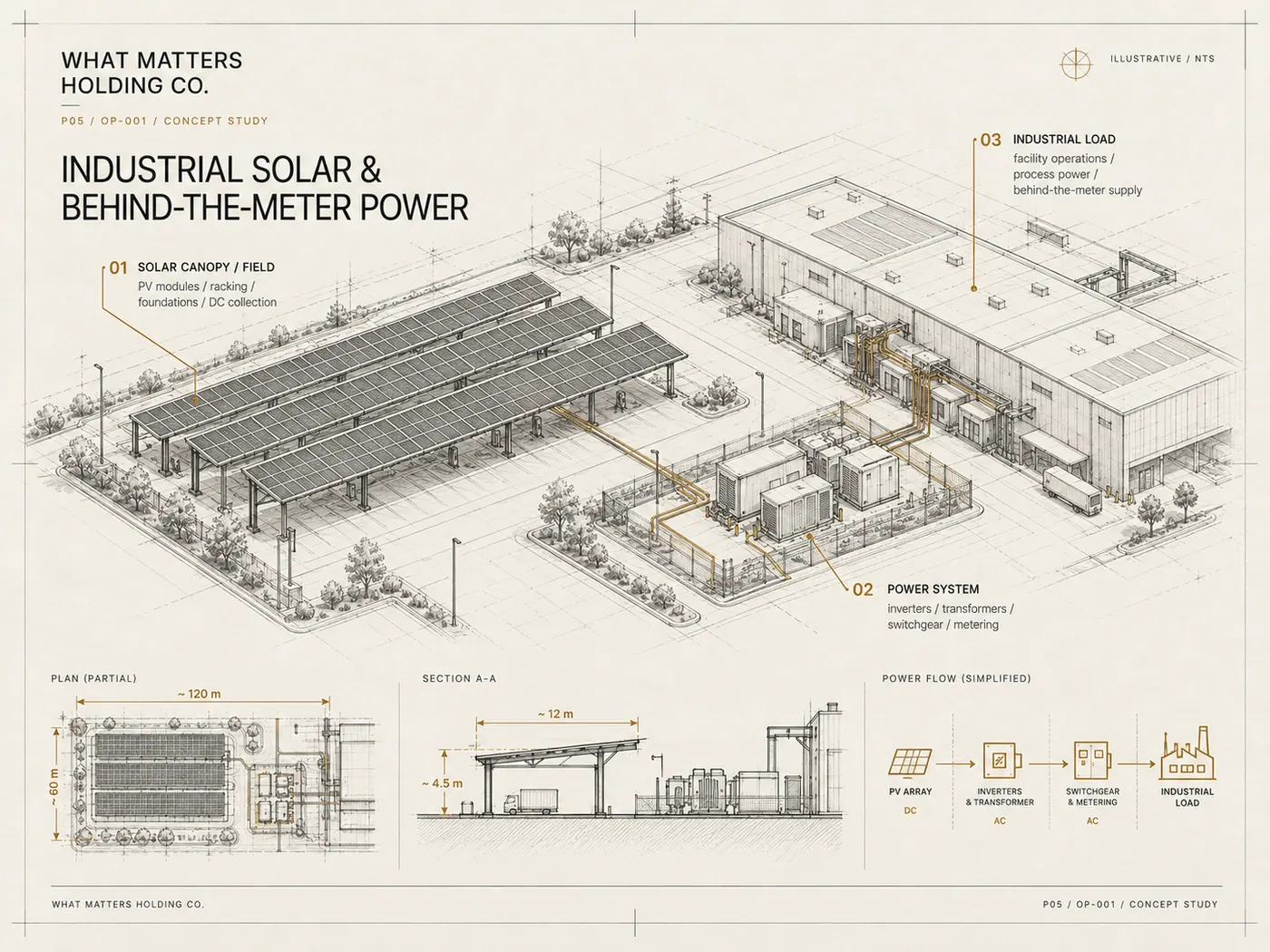
Generated concept art only. Sites, depicted dimensions and components are not validated physical assets or approved engineering designs.
THE PHYSICAL CONSEQUENCE OF DIGITAL CHANGE
Industrial intelligence, electrification and automation do not scale in isolation. They rely on power, compute, land, infrastructure and new forms of coordination.
For WMH, the opportunity lies at these intersections — but only where a real demand case can be demonstrated.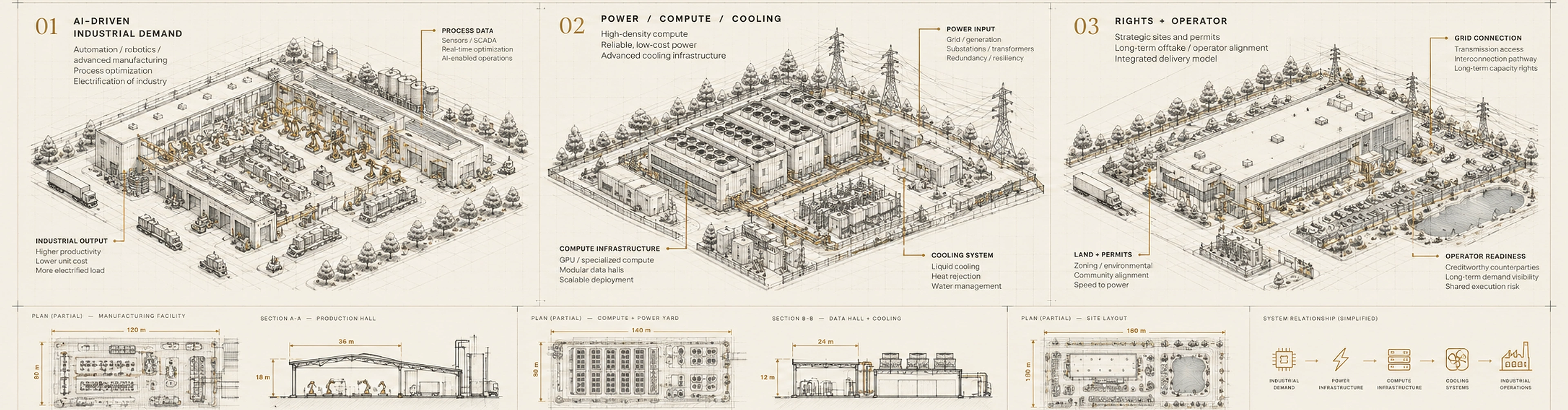
Software-driven capabilities depend on computing capacity, electrical power, cooling and reliable operations. Each dependency introduces a physical constraint.
More demand for intelligence does not establish a bankable compute project. Real users, capacity requirements, energy availability and operating terms must be demonstrated.
WMH's proposed role is to examine contracted demand and align it with power, infrastructure rights, an accountable operator and a project-specific structure.
A clearer basis to assess whether capacity should be developed, for whom and under whose responsibility.
THE PORTFOLIO LENS
Our portfolio is organized by infrastructure capability, not by a marketplace inventory. Programs span distinct evidence stages; being selected does not mean a company, asset or investment offer exists.
Energy structuring, grid flexibility and compute projects only where a defensible demand case exists.
Original vector technical study of five independent strategic system types. Drawn facilities, dimensions and interfaces are theoretical and do not establish verified WMH assets, legal rights or actual program-to-program links.
COMPLETE STRATEGIC VERTICAL INDEX / SELECT A DIRECTION
THE PLATFORM
Each study explains a market need, the delivery obstacle and the kind of solution WMH would seek to structure. These are examples for exploration, not available investments.
ENERGY / POTENTIAL DEVELOPMENT MODEL
A hypothetical industrial power solution linking a named electricity load, appropriately controlled solar generation, network requirements and an accountable operator.
A changing industrial electricity load can make power cost, availability and reliability a constraint on production.
Test the buyer load, site and grid route, rights, operator responsibilities and project economics before considering an instrument.
LAND / POTENTIAL AGRIPV MODEL
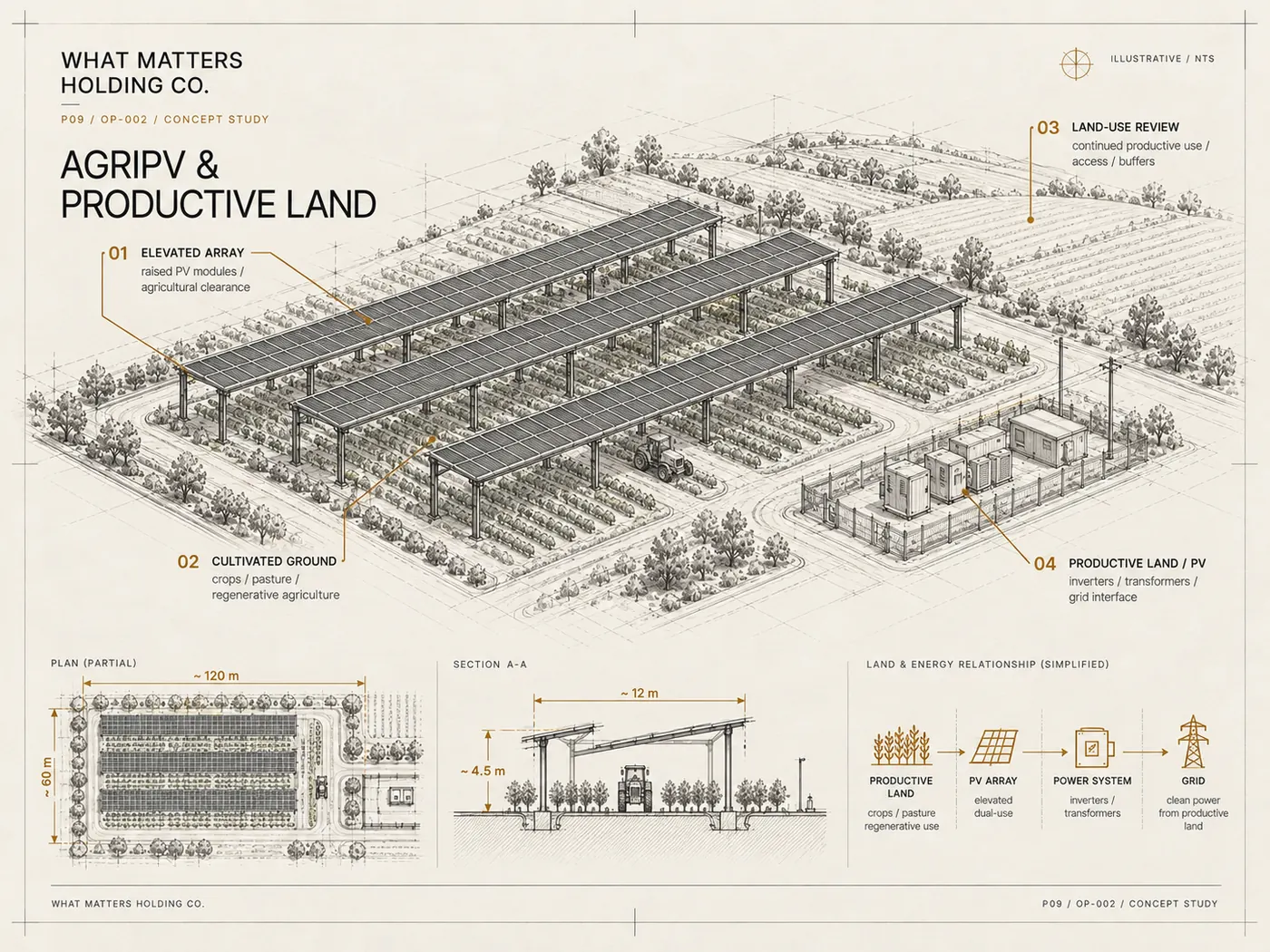
A potential model for productive land where agricultural operations and energy infrastructure have compatible rights and accountable operators.
Productive land and new energy needs can compete for space, permits and operating priorities.
Qualify agricultural and energy uses together, including the farm operator, power buyer, land rights and site constraints.
INDUSTRIAL / POTENTIAL CAMPUS MODEL
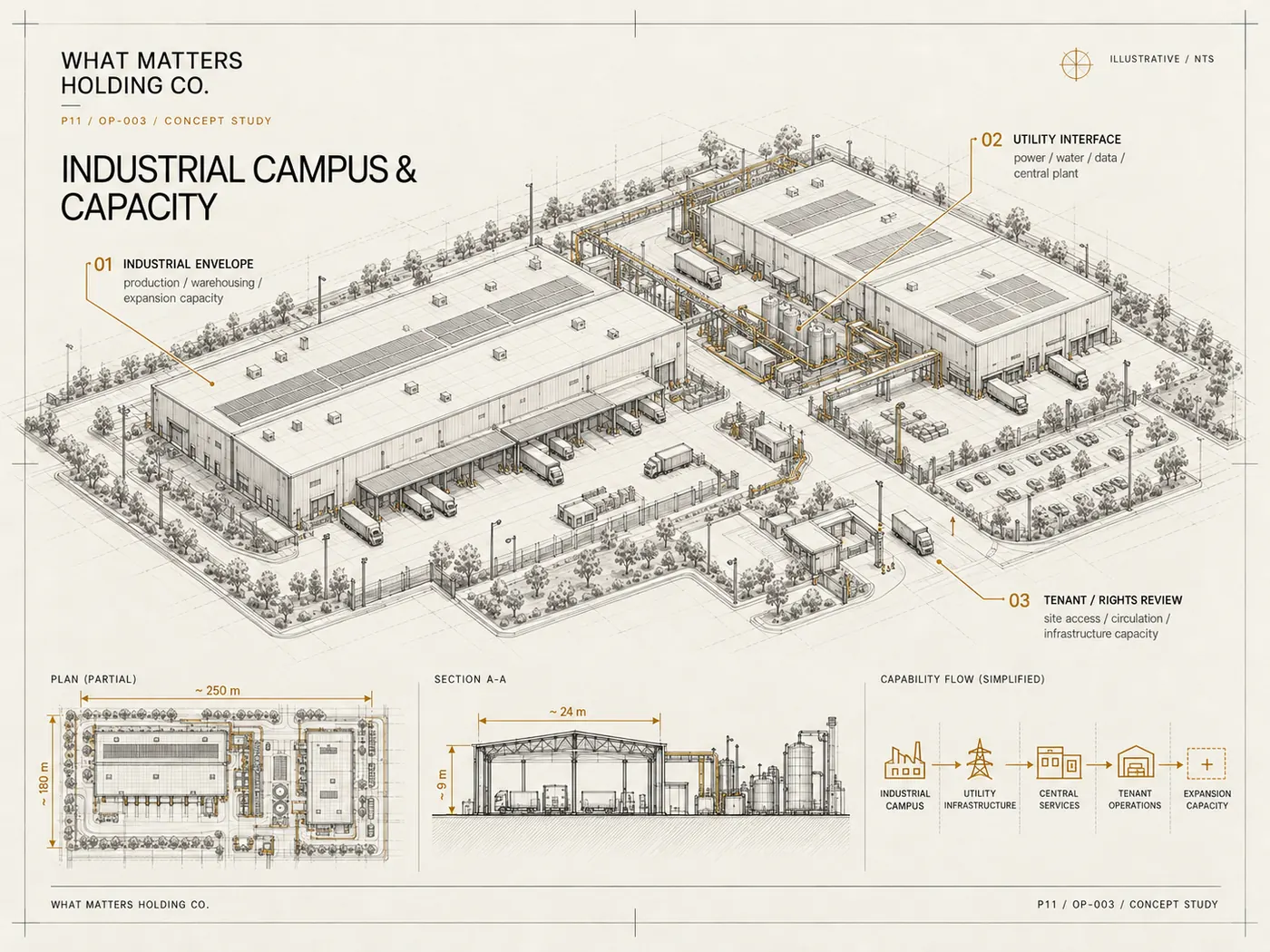
Industrial sites or properties may qualify where there is an identified tenant demand, verifiable rights, an accountable sponsor and a delivery plan.
Industrial capacity depends on the fit between a user requirement, utility connections, site access and available operating capability.
Require a documented owner or broker mandate, named potential user, infrastructure assessment and execution responsibility.
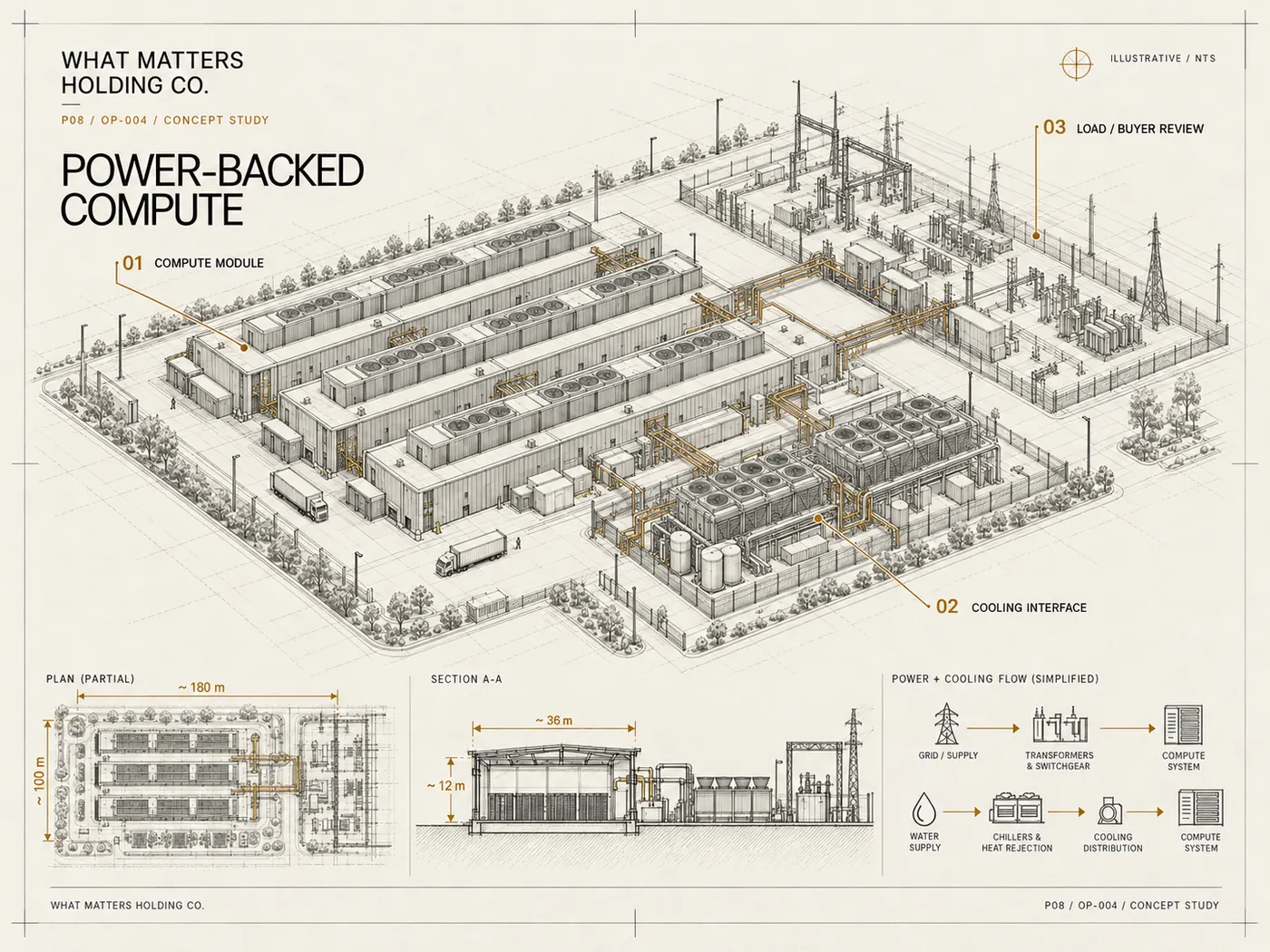
COMPUTE / CONTRACTED DEMAND MODEL
A concept linking contracted compute demand with power availability, an operating counterparty and a financeable delivery structure.
AI and digital workloads create demand for reliable compute capacity, but power, cooling and accountable operations determine delivery.
Begin with a qualified compute buyer and contracted requirements; examine electricity, location, cooling and operating commitments.
These are illustrative opportunity archetypes, not verified live listings, owned assets or investment solicitations. Specific sites, figures, rights and counterparties will appear only after evidence and publication approval.
THE OPPORTUNITY IS THE BEGINNING
A potential project does not become financeable because it appears on a platform. WMH's sponsor–operator thesis addresses the gap between opportunity, evidence and accountable execution.
Identify a genuine buyer, payer or industrial load. Without demand, the concept does not become an investable case.
We seek to structure projects, not to promise that every opportunity will advance. Proof must precede capital; different vehicles, operators and counterparties retain distinct rights and responsibilities.
A PERMISSIONED PATH TO REAL OPPORTUNITIES
As the platform evolves, different counterparties should progress through public discovery, appropriate qualification, restricted review and legally supported participation. No account or investment action is live in this preview.
A documented buyer, verifiable evidence, accountable operator, defined rights, risk ownership and a legally appropriate instrument are prerequisites to capital consideration. Selection does not advance a program and does not establish an investment.
Explore sectors, approaches and controlled descriptions of potential opportunities.
Identify your role and complete the appropriate access, eligibility and disclosure checks.
Access only the information you are authorized to receive: diligence, project scope and counterparty documentation.
Discuss a potential investment, mandate, asset partnership or project vehicle; no implied commitment.
If legally documented, follow obligations, decisions and reporting within your authorized scope.
DIFFERENT PARTICIPANTS. DIFFERENT RIGHTS.
Investors, project sponsors, owners, industrial buyers and brokers engage for different reasons. Access and documentation should reflect the participant's actual role.
SELECT A PARTICIPANT PATHWAY
Potential service and access scope — not an active mandate or offer.
Investment mandate, risk parameters and relevant eligibility.
Controlled, evidence-based project review and the appropriate legal participation route.
Review allowed diligence, discuss specific instruments and understand reporting rights — only if authorized.
BEYOND THE PUBLIC OVERVIEW
Private opportunity materials should only be available at the appropriate stage of qualification, confidentiality review and legal eligibility.
WHAT MATTERS HOLDING CO.
WMH is developing a focused portfolio thesis spanning trust and capital infrastructure, industrial AI, energy and compute, resilient land and industrial systems, and advanced manufacturing.
The strategic architecture currently encompasses five verticals and thirteen programs at different maturity stages. These are not thirteen operating companies or available investment products.
RETURN TO THE BEGINNING ↑